New Field Notes
Field Notes, every Monday.
Read


UPDATED: November 3, 2026
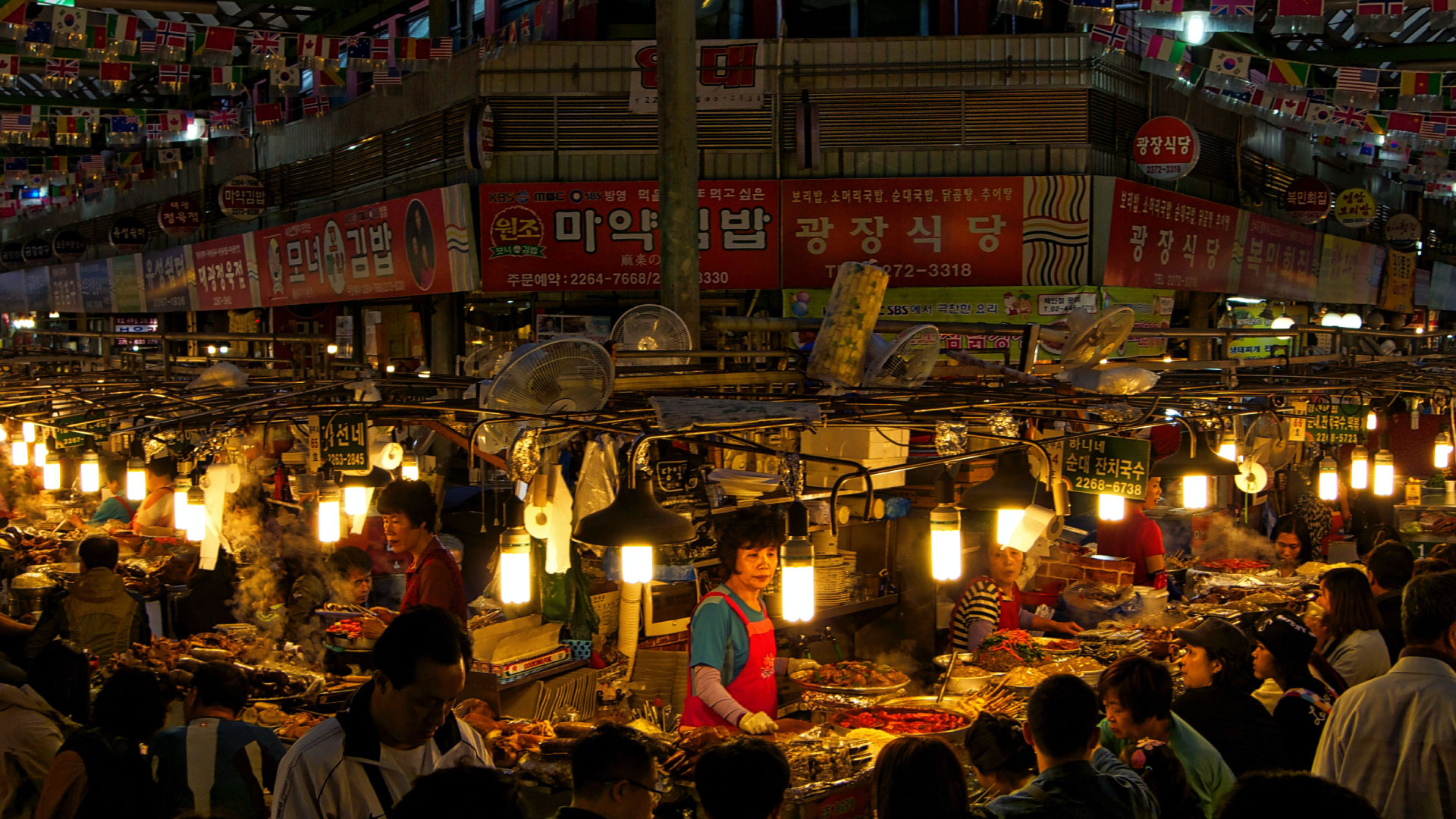
One of our favorite ways to experience a new country is through food. It's a wonderful way to learn about the culture and enjoy some delicious flavors along the way. Korea in particular takes great pride in its traditional dishes and loves sharing them with others. We spent three weeks in Seoul in October 2022, ate our way through Gwangjang Market twice, and filmed a whole food tour there. Here are the 16 foods we most recommend trying in Korea, with what they cost now and how to order them.
Note: For the best chance to try many of these traditional Korean foods in one night, we highly recommend a food tour through Gwangjang Market. We booked this one on Airbnb, and when we checked in October 2026, the same tour was still running.

In the film you'll see us try tteokbokki, kimchi and pork mandu, hotteok, and even san-nakji (live octopus). Yes, it was still moving.
Bingsu is a shaved ice dessert topped with things like sweetened red beans, condensed milk, fruit, syrups and cereal. The ice can be coarse or fine, almost like snow, depending on the shop. Korean summers get hot and sticky, so bingsu is a wonderful summer treat. Note: our personal favorite is mango bingsu! If you want the classic, order patbingsu, the red bean version.
Haemul pajeon is Korea's version of a savory pancake. It's made with a batter of flour, eggs, and lots of green onions, with seafood like shrimp, squid and clams mixed in. Think of it as a cross between a frittata and a pancake. At Gwangjang, look for its cousin bindaetteok too, a thick, crispy mung bean pancake. It was about ₩6,000 at the big pancake stalls when we checked in 2026, and I'd order it with a cup of makgeolli (rice wine).
Beondegi is one of Korea's most famous street snacks, and the most adventurous one on this list. It's steamed or boiled silkworm pupae, seasoned and served in a paper cup. The texture is a little crunchy on the outside and soft inside, and the smell is strong and earthy. You'll usually find it in cups at markets and street carts. I'll let you decide on this one, but if you're feeling brave, it's a great story to bring home.
Gogigui is Korea's famous barbecue, with a variety of meats and side dishes. The meat is usually cooked over a grill right at your table. Samgyeopsal (thick pork belly) is the classic, and bulgogi and galbi (marinated beef and short ribs) are great if you want something sweeter. My tip: wrap a piece in lettuce with garlic, a little ssamjang (dipping paste), and kimchi, and eat it in one bite. Many BBQ spots want at least two portions per order, so it's a good one to share.

Bungeoppang is Korea's fish-shaped pastry, traditionally filled with sweet red bean paste. Now you'll also find custard, Nutella, sweet potato and even pizza fillings. It's a popular snack among Koreans and very fun to eat. It's mostly a winter street food, so you'll see the carts pop up when it gets cold, and I'd grab one warm from a cart on a chilly night. Prices have gone up, and the stalls are harder to find than they used to be. In central Seoul, expect about ₩1,000 to ₩1,500 each in 2026.
Banchan are the small side dishes that come with your meal. Common banchan include kimchi, seasoned spinach, bean sprouts, pickled radish, potatoes, eggs and more. Most restaurants set out several little dishes on the table for everyone to share, and they change them with the seasons depending on what veggies are fresh. One of our favorite things about eating in Korea: banchan usually come free, and refills are free too. More on that below.

Bibimbap is a Korean dish of rice, vegetables, and usually an egg, served in a bowl. It can come hot (dolsot bibimbap, in a sizzling stone bowl) or cold, and it often comes with gochujang (red chili paste) to add flavor. I know Koreans would probably be appalled if they heard me say this, but bibimbap is Korea's healthier and older take on a rice bowl from somewhere like Chipotle.
We highly recommend trying yukhoe bibimbap at Buchon Yukhoe in Gwangjang Market. It's listed in the MICHELIN Guide as a Bib Gourmand (Michelin's pick for great food at a good price), and it's still super affordable. Ours was 9,000 won, and it was about ₩11,000 in 2026. Get there early and give it a try!
How to eat it: after our film went up, a lot of Korean viewers kindly told us we ate ours wrong. Put the rice into the bowl, add the sauce, and mix everything together with your spoon before you eat. I still have so much to learn!
Chimaek is Korea's favorite late-night snack and a must if you're looking for something to eat in Korea. The name comes from chikin (chicken) and maekju (beer), and it's popular with all ages. Korean fried chicken is usually double-fried, so it's extra crispy, and you can get it plain, coated in a sweet and spicy yangnyeom sauce, or soy garlic. I'd save it for a night out with friends, because it's made for sharing.

Kimchi is Korea's most famous dish and a must-try if you're visiting Korea. It's made from fermented vegetables, most often napa cabbage, with chili pepper, garlic and other seasonings. Kimchi has a distinct spicy, sour flavor that can be strong at first. Before Korea, I had no idea I'd actually love fermented cabbage with a whole lot of chili. You'll get it with nearly every meal, and every restaurant's tastes a little different.
Mandu is Korea's version of dumplings. It can be boiled, steamed or fried and comes with fillings like pork, kimchi, seafood and vegetables. At Gwangjang we had kimchi mandu and gogi (pork) mandu at Gohyang Kalguksu, the stall from Netflix's Street Food: Asia, and they were delicious. In 2026 a bowl of their dumpling soup was about ₩8,000.
Gyeranppang is a warm, slightly sweet bread with a whole egg baked right on top. It looks like a little oval muffin, and it's a favorite street snack on cold days. I'd grab one for a cheap breakfast on the go. Expect about ₩2,000 at street stalls in 2026.
Hotteok is Korea's sweet pancake. The dough is filled with brown sugar, cinnamon and chopped nuts, then pressed flat and fried until golden and the sugar melts into syrup. Be careful with your first bite, because that melted sugar is really hot. We ended our Gwangjang food tour with one. You'll usually pay about ₩1,000 to ₩2,500, depending on the stall and the filling.

Tteokbokki is chewy rice cakes simmered in a sweet and spicy red chili sauce, usually with fish cakes and sometimes a boiled egg. It ranges from almost sweet to extra spicy, and you'll see it bubbling in big pans all over the markets. It was the very first thing we tried at Gwangjang. Expect about ₩4,000 to ₩5,000 a serving at street stalls in 2026.
Dalgona, or as the rest of the world knows it, "Squid Game candy," is a crunchy honeycomb toffee made from just sugar and baking soda. It's melted, flattened, and pressed with a shape, and the game is to break the shape out without cracking it. It's thin, crispy and fun to eat, and you'll find it at street stalls and markets. I'd buy one just to try the game.
Kimbap, often called Korea's version of sushi, is cooked rice rolled in seaweed and filled with things like ham, egg, pickled radish and vegetables. There's no raw fish, and the rice is seasoned with sesame oil instead of vinegar. Kimbap is in convenience stores, supermarkets and restaurants all over Korea, so it's a great cheap meal on the go. I'd keep one in your bag for a long day of sightseeing. At Gwangjang, try mayak gimbap, the tiny "addictive" rolls, for about ₩3,000 to ₩4,000 a plate.

Moment of truth: we never found a coffee shop in Korea that served especially noteworthy coffee. We had several shops serve us decent coffee, but nothing to write home about. However, Korea has some of the most beautiful and aesthetic coffee shops we've ever seen! We highly recommend Cafe Onion in Anguk, which has traditional floor seating in an old hanok, or Cerulean Insa, which is half modern glass cafe and half traditional hanok home.
Cafe Onion Anguk is still one of the most popular cafes in Seoul, so expect a line on weekends and holidays. In October 2026 it opened at 7:00 AM on weekdays and 9:00 AM on weekends, and an Americano was ₩5,500. Cafes in Seoul change fast, so I'd check Naver Map before you go.
Prices have gone up since our trip, and they change from stall to stall. Here's roughly what we found when we checked menus and recent reports in 2026:
For a rough guide, ₩1,000 is a little under a dollar. Most places take cards now, but I'd still carry some cash for street carts.
Here's what I'd want a friend to know before they sit down to eat in Korea:
Korean food has a reputation for heat, but plenty of it is mild. If spice isn't your thing, I'd start with these:
Vegetarian? Bibimbap is the easiest order, just ask for it without meat. Keep in mind that a lot of kimchi is made with fish sauce or salted seafood, and many soups use an anchovy broth.
One tip: Google Maps doesn't give walking directions in Korea. Download Naver Map or KakaoMap before you go. Our first trip to Seoul guide has more on getting around.
Kimchi is the most famous, followed by Korean BBQ, bibimbap, tteokbokki and Korean fried chicken.
Some of it is, like tteokbokki and kimchi, but lots of Korean food isn't spicy at all. Hotteok, bungeoppang, kimbap, mandu and Korean BBQ are all mild.
Yes, at most restaurants banchan come free with your meal, and refills are free too. Some places use a self-serve banchan bar.
No. Tipping isn't expected at restaurants, cafes or street food stalls.
Put the rice into the bowl, add the sauce, and mix it all together with a spoon before eating.
Gwangjang Market. You can try pancakes, dumplings, mayak gimbap, tteokbokki and yukhoe all in one food alley, open 9:00 AM to 11:00 PM daily.
We absolutely loved Korean food. While some people don't because almost every meal is served with kimchi, we really enjoyed it. Some of it definitely leans on the unhealthy side (looking at you, chimaek), but most of it is rich in veggies and rice. Go hungry, say yes to the weird stuff at least once, and leave room for one more hotteok. If you want to see more of our time in Korea, watch our full film, Americans Visit Korea for the First Time.